Key Takeaways
- Mainland businesses in Sharjah get their licence from SEDD (sedd.ae). Its website describes more than 100 government services, from business setup to renewals and trade names.
- Commercial, industrial and professional licences need premises. SEDD also offers instant, electronic trading, home accreditation, Birq and industrial office licences.
- According to SEDD's FAQ, foreigners have been able to own 100% of most businesses without a local partner since 2021. A few activities are still kept for citizens (as of October 2026).
- The FAQ puts the issue fee at 8 percent for UAE national partners and 13 percent for everyone else. SEDD's renewal page gives 6 and 10 percent instead (October 2026).
Most of your customers are in Sharjah, and you want a company that can trade with them directly. That usually means a mainland licence, issued for anywhere in the emirate outside a free zone. A Sharjah trade license, the document that lets your company do business there, comes from SEDD and works differently from a free zone licence. Here you'll find who issues it, which types exist, how foreign ownership works and what SEDD says it charges. If you're leaning towards a free zone instead, read our comparison of Sharjah free zones. For the rest of the country, see company setup in the UAE.
Who issues a Sharjah trade licence on the mainland
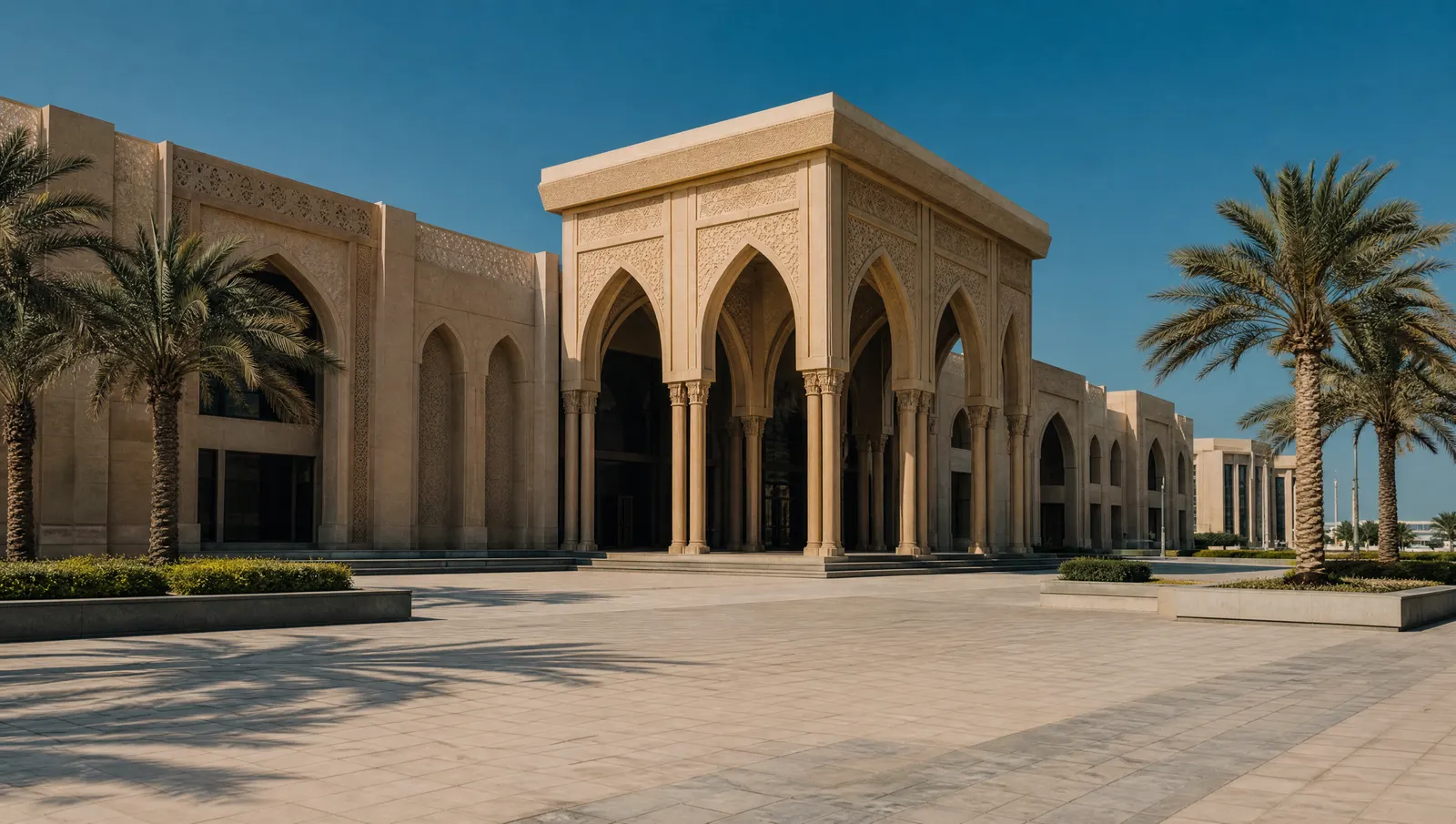
The licensing office is the Sharjah Economic Development Department (SEDD), at sedd.ae. You'll also see it called the Sharjah Economic Development Department. Its website describes more than 100 government services. Business setup, licence renewals, trade names and permits are among them.
Free zones work on their own. Each zone issues its own licences. SEDD only comes in when a free zone company wants to open a branch on the mainland.
Sharjah mainland licence families listed by SEDD
SEDD offers several kinds of licence, and each has its own conditions. On its English site, the commercial, industrial and professional licences are all tied to premises (SEDD, as of October 2026). The site also lists:
- an instant licence
- an electronic trading licence
- a home accreditation licence
- a Birq licence
- an industrial office licence
There's a business setup package on its home page too. The FAQ mentions an E-Commerce licence for online sales and an Eitimad licence for UAE nationals who work from home.
The type of licence decides what kind of space you need and which rules apply. A home accreditation licence asks for different things than an electronic trading licence, and a commercial licence needs a lease. Find out from SEDD which type fits your business before you start looking at offices.
Foreign ownership in Sharjah mainland
Since 2021, according to SEDD's FAQ, foreigners have been able to own 100% of most businesses without a local partner. Some businesses are still reserved for citizens (SEDD FAQ, as of October 2026). Gulf News reported the same on 31 July 2023, quoting SEDD figures for commercial and industrial activities.
Federal law adds its own limits. Activities with strategic impact, listed under Cabinet Resolution 55 of 2021, stay closed to full foreign ownership. So does anything a sector regulator restricts.
The local service agent is where things get unclear. That's a UAE national who owns no shares and handles government paperwork in return for a fee. Two pages on the government portal u.ae disagree on whether you need one. The guide to starting a mainland business (16 July 2026) says businesses fully owned by residents from outside the GCC, the Gulf Cooperation Council, require a local service agent from the UAE. The foreign ownership page (updated 6 April 2026) says the old rule of 51 per cent Emirati ownership or a local agent was dropped for most activities, and that branches no longer need an Emirati service agent. Ask SEDD in writing whether your activity needs one.
Don't rely on the general rule. Your licence activity, meaning the exact business you may carry out, picked from an official list, is what counts. The Basher activity search mentioned in the Gulf News report shows whether it's open to full foreign ownership, and SEDD can confirm.
Free zone licence or mainland licence for Sharjah customers
As a rough guide, a mainland licence makes sense when you sell to customers in Sharjah. A free zone licence fits better when you sell abroad or to other companies in the zone.
Already have a free zone licence and want Sharjah customers? SEDD's FAQ lists a branch of a free zone company as an option. For it, you hand in:
- the zone licence and the company's register entry
- board minutes
- an agency contract with a local agent
- registration with the Ministry of Economy and Tourism
- a no-objection letter from the Department of Free Zones
What applies in Dubai doesn't apply here. Executive Council Resolution 11 of 2025 covers Dubai free zone companies, and Art. 3(c) says a Dubai permit doesn't reach into another emirate. Some Sharjah zones say they offer a dual licence, which is a mainland branch that a free zone company runs from its free zone office. SEDD's FAQ, though, only describes the branch option. It's worth asking both the zone and SEDD which one fits your activity.
Legal form, premises and activity checks
Before you apply, sort out the legal form, the premises and the activity.
The most common form is the LLC, a limited liability company, where owners risk only what they put in. SEDD's FAQ describes it as having 2 to 50 partners. Federal law also lets an LLC have a single owner (Federal Decree-Law 32 of 2021, Article 71).
For premises, you need a lease notarised by Sharjah City Municipality. It must still be valid for at least three months after you submit it (SEDD FAQ, as of October 2026). Check which premises each type of licence accepts and how long the lease has to run.
The activity is where people usually go wrong. An activity name you used in another emirate may not exist in the same form in Sharjah, and you'll need to know whether yours is open to full foreign ownership. Pick the wrong one and you get the wrong approvals and fees. Fixing it later through a register amendment costs AED 500, 1,000, 1,500 or 2,000, depending on your legal status (SEDD FAQ, as of October 2026). It's cheaper to check first. Our guide to choosing the right activity code walks you through it.
Sharjah trade licence fees that SEDD publishes
SEDD charges the issue fee as a percentage. It's 8 percent when the partners are UAE nationals and 13 percent for other nationalities. The FAQ takes that percentage of either the lease value or the site area, depending on the activity (SEDD FAQ, undated, as of October 2026). SEDD will tell you which one your licence uses.
Renewal is less clear. The FAQ uses the same rates for renewal. SEDD's renewal service page lists lower ones: 6 percent for UAE nationals, with a minimum of AED 1,200, and 10 percent for others, with a minimum of AED 2,000. Ask SEDD which figure is current.
On top of the percentage come fixed fees. A trade name costs AED 250 if it's Arabic, AED 1,250 if it's translated and AED 2,250 if it's a foreign name. SEDD itself estimates a first year at AED 15,000 to AED 30,000.
The exact sum depends on your activity, and SEDD can work it out for you. A local adviser can also check the activity and come back with the licence type, the premises you need and the fee calculation in one note.
AdvisoryHub may receive a fee when you request an introduction; it does not affect the information on this page.
More Company Setup Guides
← Back to Company Setup in Sharjah
Related Company Setup Guides
- Free zones in Sharjah compared, SAIF, Hamriyah, SHAMS, SPC
- Business setup in mainland UAE, LLC rules, ownership and cost
- Company formation cost in Dubai and the UAE, line by line
- Trade license Dubai and the UAE, types and how to apply
- Free zone company Dubai, choosing a zone, visas and tax
- UAE free zone list by emirate, with authorities and websites
- DED activities list and how to choose the right code
- RAKEZ free zone packages, visas and the Dual License wording